If You Like This… You’ll Love That
You may have noticed by now that once I get hooked on a subject, I really get hooked. I dive in and try to read all the other books about it I can – as a very obvious example, the quasi-historical TV shows I get obsessed with and then the very real history books explaining them.
What? That’s not a plug to go read another post I’m very happy with. Obviously not. If you happen to click on that link, that’s your choice.
Anyway, what about some deep dives I’ve done that aren’t related to those specific historical moments? There’s sure been some recently, more on a natural history front than actual history.
In fact, one engrossed me so much that one night while I couldn’t sleep, I was thinking up different introductions to my ~debut novel~ that would really hook a reader. It’s a road-trip-coming-of-age-travelogue-rom-com yet I thought, “why don’t I start with a comparison to the shark attacks of 1916?” because it was so top-of-mind.
The next morning, I tried writing it. I could see where sleep-deprived me was going with the idea, but putting it into writing was… abysmal. But if I can rectify it and you hear about a novel in a few years that starts by comparing a spate of deadly shark attacks to the narrator’s romantic life, you’ll know who’s behind it.
Never fear! We will address that book in a minute if you want to read it. But it’s something I kept coming back to – books about the natural world that tie into and inspire more popular works, like blockbuster movies, or pop culture phenomena.
Sharks
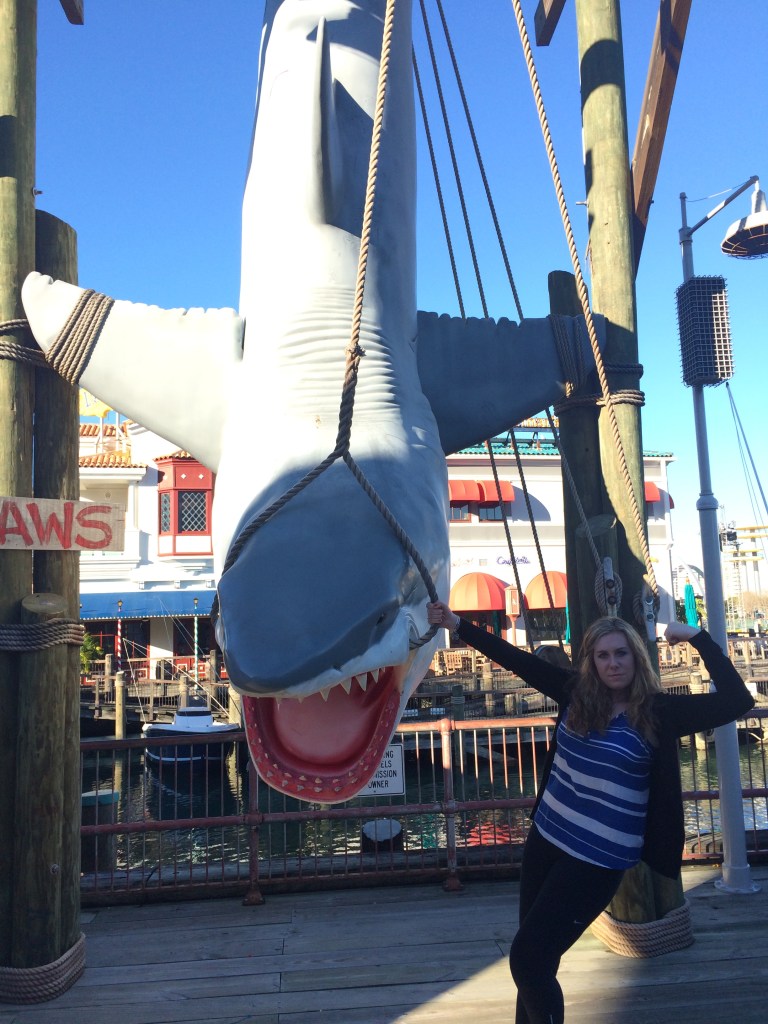
Obviously, now that I’ve mentioned that book, we’ve got to begin with the section about it. “Jaws” is one of my favorite movies – ever since my first trip to Universal Studios as a 12-year-old, I fell in love with a ton of classic movies that I’d never cared to or had a chance to watch before, “Jaws” among them.
Unfortunately, the “Jaws” ride at Universal is long gone; perhaps the guide “shooting bullets” at the animatronic shark, the shed full of fins and dismembering tools, and the toasted carcass at the end were too much and too out of date in comparison to a new Simpsons-themed land. However, the ride lasts in my memory and my heart, mostly because of the time I wore flip-flops on it (it was a boat ride, obviously) and the elderly man next to me asked me where I was from, then after I told him made a disparaging comment about Ohioans not knowing how to wear real shoes (?????????).
But I digress. As usual.
Anyway, you may or may not know that the movie “Jaws” was based on a book by Peter Benchley, of the same title. Unfortunately, the novel and its subsequent blockbuster hit induced major shark phobia and hatred, and Benchley himself regretted the negative effect that “Jaws” had on real, vulnerable shark populations.
I adore sharks. They are misunderstood, mostly due to “Jaws” as Benchley acknowledges, and are killed at a significantly more extreme rate by humans than humans are ever killed by sharks. Certainly, being the victim of a shark attack would not be pleasant, but it’s a rare occurrence and most people who die from them are more from the result of an unfortunately placed single bite as opposed to the shark having a full meal.
The main place Benchley found his inspiration was from the fatal shark attacks of 1916, along the Jersey shore and – believe it or not – up an inland river. And a lot of the truth carries over into the novel and movie: a lucrative beach community that relies on summer visitors to stay afloat, and The Man tries to cover up or play down the shark attacks to keep money in the coffers. And yet, people keep dying.
I recently read Close to Shore: A True Story of Terror in an Age of Innocence by journalist Michael Capuzzo. This book addresses two attacks in the Atlantic as well as several up an inland river, as I mentioned above, over about a week and a half time period. There are several theories about the shark or sharks, some from 1916 when they happened and many more recent, as we know more about the animals.
The author buys most into the single rogue shark theory, the same theory that propels Jaws through the community of Amity in his reign of terror. Capuzzo posits that the young shark in 1916 may have gotten caught up in the Gulf Stream and swept up to a new area where prey was scarce and it was totally out of its element, contributing to factors that either forced it to prey on whatever it could in desperation (humans) or warped its mind into a “mindless eating machine,” as Bruce says in “Finding Nemo.”
Others disagree, attributing it to several sharks, even though that seems improbable in such a short range of time in such a narrow area. The original experts, asked to consult on the case much as Hooper did in “Jaws”, initially believed sharks were harmless regardless of species or external influences and thought it may have been an orca whale.
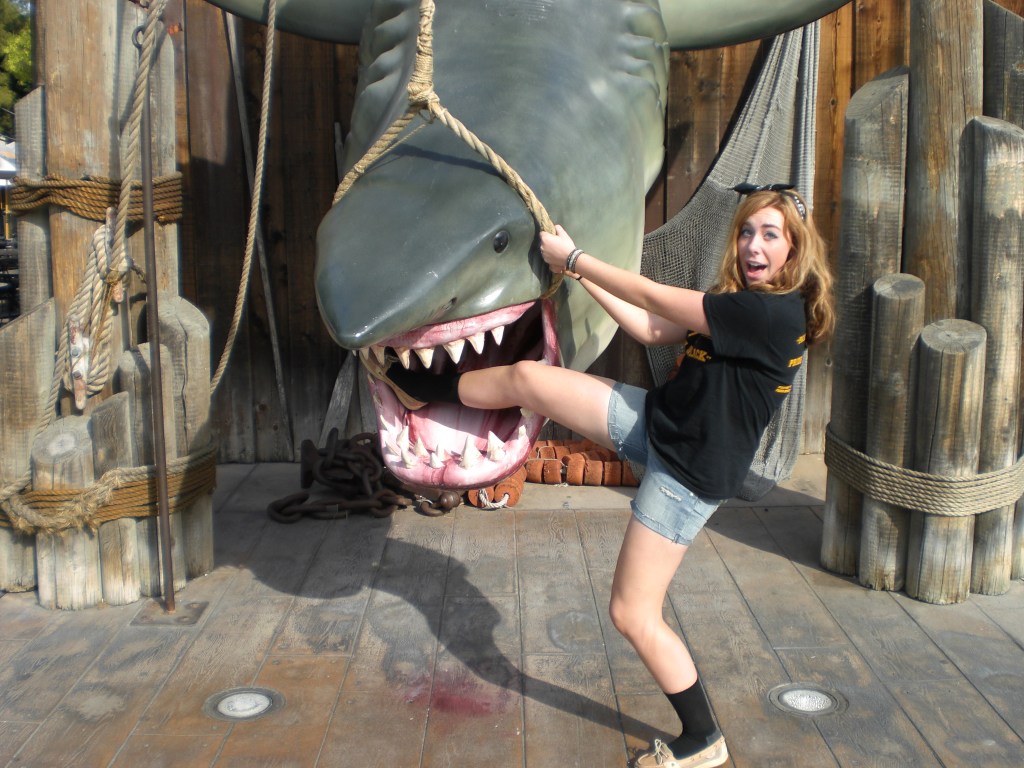
Of course, it wasn’t; much like in “Jaws” many innocent sharks were hauled up and mutilated in order to find the perpetrator and the townsfolk finally stopped the deaths by probably finding the rogue. Still, we can never confirm that was the shark in question, certainly not more than a century later.
It just goes to shows the mythos of nature is more powerful than man, and no matter how much we think we know, those aeon-old predators will always outsmart us. And yet, that doesn’t mean they don’t need our protection as well.
READ: Jaws by Peter Benchley; Close to Shore by Michael Capuzzo; The Shark Club by Ann Kidd Taylor; The Devil’s Teeth by Susan Casey
Shipwrecks
I hate being in the water but I love being on the water. Maybe that’s why I’ve recently been engrossed by books about the Titanic, Lusitania, and other doomed sailing ships. It’s like when you pass a car crash and rubberneck around gawking at it.
“That’s brutal, but at least it’s not me.”
We’ve all seen “Titanic” and read the fan theories – yes, I see you, people who think Jack was a time-traveler, and you’re insane, it was just an oversight in production. As much as we love or hate Jack and Rose, though, they weren’t real. The people who were real and suffered through the disaster were just as compelling, even though we don’t see many of them in the movie.

To that end – we have books. Thank goodness.
On one hand, it’s incredibly distressing to see passengers get sucked below into the vortex as the Titanic finally falls below the waterline and to see the old Straus couple and the poor Irish family drown belowdecks. On another, reading about it is just as poignant as those visual recollections.
Hugh Brewster’s Guilded Lives, Fatal Voyage was full of so much interesting content about the upper-class passengers of the ship. They should no more get their due than the second- and third-class passengers and employees who lost their lives, but it did give me an idea for the next great Titanic movie. I can’t give too much away because I want credit for the idea, but it’s “Titanic” meets “Brokeback Mountain” with all the cinematic acclaim and beautiful scenery and none of the three-hour drudgery.
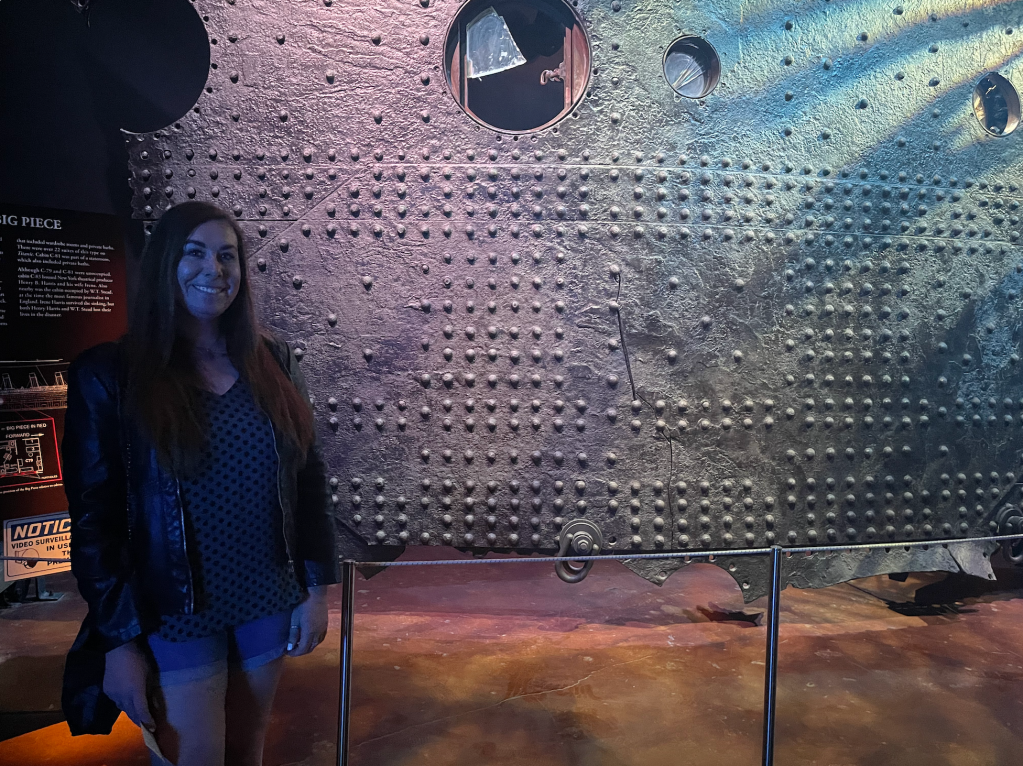
Most of us know about the Titanic, but not as many know about the Lusitania. If at all, we touch on it in APUSH classes and acknowledge the death of many Americans – including prominent figures such as Alfred Vanderbilt and “four men of world wide prominence”, as a song about the sinking said – on the passenger ship that was sunk by a U-Boat was a major contributing factor that forced the U.S. into WWI.
Erik Larson is a gifted journalist who manages to describe tragedies without trivializing them, such as H.H. Holmes’ murders during the Chicago World Fair in The Devil in the White City. His account of the sinking of the Lusitania in Dead Wake was incredibly compelling – highlighting not only prominent figures like Vanderbilt but also everyday passengers who survived to pen their own accounts of the event. From first class to the crew to the secret intelligence agencies in London and even sailors aboard the U-Boat, Larson puts together a comprehensive image of the sinking – and whether or not it was allowed to happen to spur the U.S. into war – a theory many maintain about Pearl Harbor several decades later.
Lastly, Nathaniel Philbrick’s In The Heart of the Sea, which inspired the movie of the same name starring Chris Hemsworth, Brendan Gleeson, and Cillian Murphy, addresses a whole new danger of maritime activity: your ship sinking in about the most remote ocean possible and your crew having to embark more than a thousand miles to land in small whaleboats. You may have to resort to cannibalism, FYI.
Fun!
Actually, the sinking of the whaleship Essex inspired Herman Melville to write Moby-Dick, just as the shark attacks of 1916 inspired Benchley. Truth is stranger than fiction, I guess.
READ: In the Heart of the Sea by Nathaniel Philbrick; Moby-Dick by Herman Melville; Dead Wake by Erik Larson; Gilded Lives, Fatal Voyage by Hugh Brewster; Voices From the Titanic by Geoff Tibballs; A Night to Remember and The Night Lives On by Walter Lord; The Band That Played On by Steve Turner
Exploration… in South America
Obviously, colonialism is BAD and there are a lot of issues with the traditional context of studying European exploration into the southern hemisphere. But beyond that “captain obvious” statement, there have been a lot of recent trips into Central and South America by historians and journalists to learn about uncontacted tribes, the current state of resources, poachers, drug cartels, and stories of ancient ruins, to name a few.
It’s entrancing.
Every book I read about the area, I’m torn between “holy crap, I want to go here right now” and “if I ever went here I would die in a hot second.” Doesn’t matter if it’s Nicaragua or Brazil or Peru. The same reaction, every time. The closest I’ve been is hacking my way through the Bahamian wilds to reach a dig site my archaeological team was excavating. No drug cartels, no venomous snakes – just crab skeletons and really stinky succulents. And that was hard enough.
(I faked sick the day the team did the majority of the hacking. I sharpened the machetes then sent everyone else off on their merry way.)

But there is an amazing niche of non-fiction literature covering this sort of exploration, both historical and modern-day. If you’re entranced by the movie version of “The Lost City of Z” with Tom Holland, Robert Pattinson, and Charlie Hunnam, I promise you’ll enjoy the book even more. If you’re entranced by “Dora the Explorer,” then I guess you’ll probably also like these, although you’ll be disheartened to find that Swiper is replaced by untrustworthy porters and guides.
The Lost City of Z by David Grann is one of my favorites, so much that I first read it by purchasing it on Kindle and then loved it so much that I also had to purchase a hard copy for my bookshelf. Percy Fawcett’s struggle to reach the apex of Royal Geographical Society prestige is both endearing and frustrating, and it’s heartbreaking to read about his final expedition to try to discover “Zed.” (Those Brits strike again with their ridiculous pronunciations.)
The Unconquered by Scott Wallace is another great read, although in a different vein. While Fawcett and his crew yearned to discover a historic city full of riches and relics, Wallace set out on an expedition throughout the Amazonian interior with Sydney Possuelo, an expert and authority in the region who has worked hard to keep the remaining uncontacted Amazonian tribes uncontacted, against the best efforts of poachers, loggers, and even the government.
What I love most about these Central and South American exploration books is that most of the authors make the treks themselves. Grann follows Fawcett’s tracks as best he can, and Wallace joins Possuelo’s expedition to make sure the uncontacted tribes are still thriving. Additionally, in The Lost City of the Monkey God, Douglas Preston re-traces Theodore Morde’s steps throughout Honduras and encounters just as many perils, albeit of a different, more modern sort than Morde ran into.
Even in an account of journeys through the interior in the early 18th century, author Robert Whitaker’s love of Ecuador and his long tenure in the country shine through with a passion that any short-term visitor could never replicate.
Maybe it’s not smart to duplicate the trips and wake up to a fer-de-lance staring you in the face, but living vicariously through so many others throughout Central and South American contributes to both learning from the past and celebrating the current conservation efforts.
READ: The Mapmaker’s Wife by Robert Whitaker; The Lost City of Z by David Grann; The Lost City of the Monkey God by Douglas Preston; The Unconquered by Scott Preston; River of Darkness by Buddy Levy
Exploration… in Africa
Please come into this section with the same mindset as the previous one: colonialism is bad and Europeans permanently damaged the rich, historic cultures of this continent, not least of all through disease and slavery.
Many historical documents reflect the views of the time, of course; sharing the “barbaric” values of tribes with an exploitative twist. However, the great thing is that modern writers share those quotes and documents with a modern mindset – these people were wrong, and their interpretations were wrong, but they provided invaluable insights on cultures that were soon to be tainted or wiped out completely by Europeans, and certainly colored how reports were sent out and how the outside world learned about Africa.
One major representation of this phenomenon is Between Man and Beast by Monte Reel. Reel covers the unique historical personality Paul du Chaille, the first known white man to encounter wild gorillas and bring specimens back to Europe – during the great evolution debate and scientific boom of Owen, Darwin, Huxley, Burton, and others.
Du Chaille’s first sponsored expedition into the interior brought him in contact with many native tribes and allowed him to send more than 20 gorilla pelts back to Europe, sharing that elusive beast with England and other countries, including his “native” France. At a time before zoos, and long before our dear Harambe (RIP), people couldn’t fathom a creature like the gorilla – and many of the scientists at the time used them to further racist theories, eugenics, and the idea of the “missing link” once du Chaille’s specimens arrived. Du Chaille, while not totally bought in, certainly wasn’t a strong advocate of racial equality.
It’s infuriating that even when our protagonists are more forward-thinking, they’re still mired in the time. That carries over to another book on the area, addressing the quintessential British explorers Stanley and Livingstone.
As a child, I knew nothing about these two other than that there was an African-themed mini golf course near my grandparents’ house in Bradenton, FL. There were a few explorer statues scattered about between the animal statues and wreckage of a crashed plane, and more than once the iconic quote “Mr. Livingstone, I presume?” was plastered across the signage.
I am terrible at mini golf, but I was actually decent at that course and enjoyed introducing myself to others by saying “Mr. So-and-So, I presume?”, so Stanley and Livingstone are a long-term interest to me.
Turns out, they’re both the worst, but that’s kind of what you’d expect, also.
Stanley was a failure at everything until he found a sensationalist newspaper to fund his world travels and journalism, which is how he eventually found himself on the trail of Livingstone, who had been somewhere in the Tanzanian wilds for several years. To Stanley’s credit, he never gave up, despite the hundreds of porters and stock animals dying or deserting under his lead. Meanwhile, Livingstone was never necessarily lost, yet he certainly needed Stanley’s aid when the Welshman arrived.
I spent a lot of time on Google Maps trying to trace their routes, especially Stanley’s – from Zanzibar, to Bagamoyo, to Tabora and Ujiji. When you zoom out on Maps you’re like, how did this take you so long? And then when you zoom in a little more, and really think about the state of travel now versus in the early 1870s, you think, how did this take you so little time?
I had 19 vacation days from work and I genuinely thought, “why don’t I hop over to Tanzania and try to follow Stanley’s trail, except with tour guides and vehicles and all modern safety precautions?” Turns out that’s not an impromptu trip you can take, though. Needs some planning.
At any rate, the Exotic (TM) is quite a thing, a travel aphrodisiac. You read about the donkeys sinking into the swamp and dying, the horses being killed by parasites and tsetse flies, the porters deserting with goods or perishing from diseases, even the namesake explorers losing tens of pounds due to dysentery, yellow fever, malaria, and pretty much everything else that could kill them save for a stroke of luck.
And you still think, “I want to go there.”
Maybe that’s the spirit behind exploration. The only difference between then and now is that maybe we shouldn’t conquer and colonize people. Maybe! Just a thought!!
READ: Into Africa by Martin Dugard; Between Man and Beast by Monte Reel; How I Found Livingstone by Henry Morton Stanley; Explorers of the Nile by Tim Jeal
Are there some topics you’ve first read about that have pulled you down the rabbit hole? If so, what are they? Keep an eye out for similar posts coming soon – there’s no end to fascinating niche historical events that stumble onto the horizon!
Listicles blog posts Buying New Bookshelves Fiction IYLTYLT Listicles Non-Fiction

 Buying New Bookshelves
2 Comments Leave a comment ›