Let’s Talk About Death, Baby
It’s hard to look away from the morbid sometimes. The gruesome details catch your eyes and linger in your mind, no matter how much you want to forget.
In movies, the talented SFX teams have come far from the days of using chocolate syrup as blood à la “Psycho”. Of course, that means death can be incredibly difficult and painful for not just the characters on screen but for us, as viewers, to watch. In books, it can be harder to judge when too much is too much – the details make different readers react differently, as opposed to a test audience simultaneously barfing on the theatre floors when someone gets graphically disemboweled.
Pretty much any author who covers death, real or fictional, will address it as differently as individual readers will react. What prompted this piece was the book Hell’s Princess by Harold Schechter, about the early 20th century murderess Belle Gunness. It reminded me about a book I read last year about Lizzie Borden, and I found similarities between the ways the authors covered the crimes, trials, and evidence.
And yet, you obviously (and thankfully) don’t need to be murdered in order to die. What happens when we’re dead, and how do people get into it?
Murderers, scientists, morticians – there’s a unique niche out there for women connected with death. If you’re looking to join the field, please take one of the latter two routes.
Murderers
I know you just read that paragraph but let me reiterate: do not murder people. Please.
Instead, read about some turn-of-the-century American killers, Belle Gunness and (maybe) Lizzie Borden. There have been plenty of murderesses both before and after, but two books have made me tie these two together here.
The Trial of Lizzie Borden by Cara Robertson and Hell’s Princess by Harold Schechter are fascinating windows into two crimes and trials that took the entire country by storm. The two actually overlapped in terms of activity – Borden in 1892 in the small town of Fall River, MA, while Gunness’s spree lasted from 1884 through her alleged death in 1908 – but the latter’s crimes would not come to light until after the fire that burned down her farm in La Porte, IN.
Most of us know the rhyme about Borden:
Lizzie Borden took an axe,
gave her mother 40 whacks.
When she saw what she had done,
she gave her father 41.

What many people may not know is that Lizzie was actually acquitted of the murders after a complicated inquest and trial in the heat of the summer. Despite her strange personal comportment and some circumstantial evidence, she was allowed to walk free after the jury debated for only an hour and a half. The trial contained mentions of period blood and rumors of lesbianism, introduced both victims’ skulls as evidence, and was one of the first major crime events to be reported live by journalists from around the country. Sensational stuff.
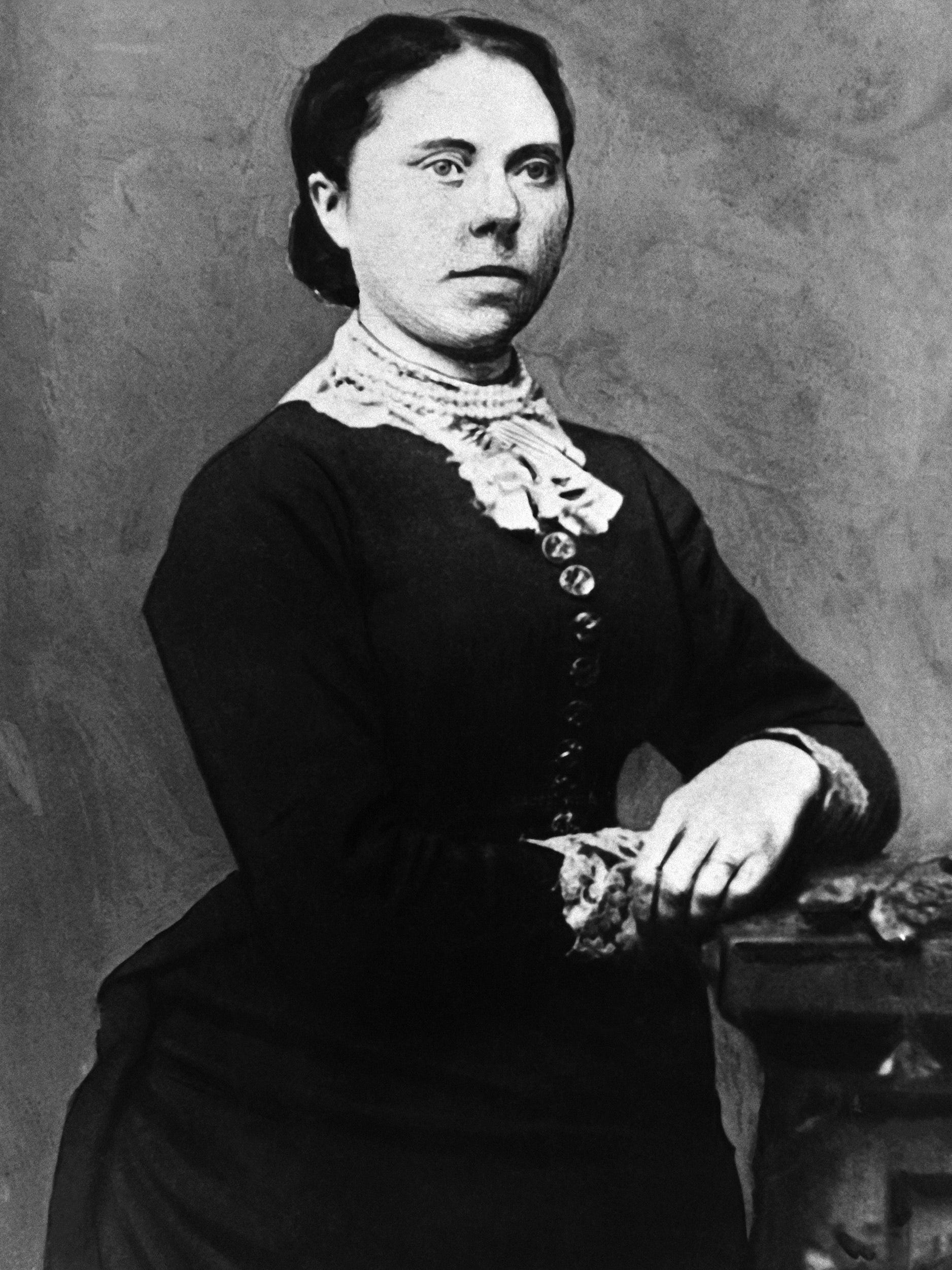
The standard to mark someone as a serial killer is three murders; obviously, Lizzie doesn’t quite make the grade. Whether she killed her father and stepmother or someone else did, it seems to have been more of a heat-of-the-moment crime, or an impulsive end to a longer-term problem. Belle Gunness has neither of those issues.
Noted to have killed at least 14 victims, including two husbands, her adopted daughter and likely several other children, as well as a plethora of farmhands, Gunness was the epitome of a premeditated killer. Her first husband conveniently died on the one day where both his old and new life insurance policies overlapped and would pay out; she placed ads in several Norwegian-language publications to entrap young immigrant men who either expected to marry her or take over the farm and make money while instead she killed them and took all their money; she told everyone she sent her adopted daughter Jennie to school in California when most likely she killed the teen and buried her in her DIY backyard cemetery.
Nothing impulsive about that.
What, to me, ties together these women is more these two books than their actual crimes, alleged or proven, time period, or anything else. Both Schechter and Robertson spend the first half of the book teaching us about the women’s lives, backgrounds, communities, victims, and so on. The second half is dedicated to the trial, and the meticulously researched and reported details that came out of these early headlining cases.
Borden herself was on trial, but Gunness was thought to have died in the fire that consumed her farmstead and opened the door to suspicious relatives to investigate disappearances. However, many people doubted that Gunness had actually died – the woman’s body found alongside three children in the ashes was both shorter than Belle and headless – and so her final farmhand and suspected accomplice was the one on trial for arson and manslaughter. His defense’s entire case hinged on Belle remaining alive, framing him, and moving out on the run.
Neither case will ever be solved for sure; Lizzie maintained her innocence as did Belle’s suspected accomplice, Ray Lamphere, but those seeking to put their names in headlines or unofficially crack the case continued to share theories throughout their lives and through to modern day. There’s no happy ending for the victims, and if you want a solid answer to these cases, there won’t be one for you, either.
Scientists
Unless you have the misfortune to be Andrew Borden or Andrew Helgelien (maybe try not to run into murderers if your name is Andrew), your body will probably be peacefully embalmed and buried or cremated after death. But what are some other options?
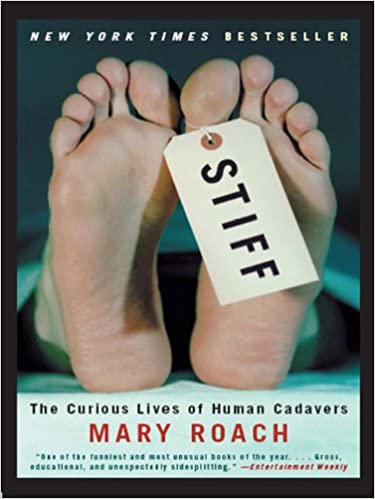
Mary Roach, a psychologist and former copy editor who found herself writing about science for the masses, turned it into a career. While she’s written many books, the two we’ll address here are Stiff: The Curious Lives of Human Cadavers and Spook: Science Addresses the Afterlife.
Even though she isn’t a trained scientist, her background in making science accessible to the masses makes what could be a dark or sensitive subject an enjoyable read.
Meanwhile, a lot of us have questions or concerns about the afterlife. Without having an anonymous hotline to whatever god you do or don’t believe in, there’s obviously no way we can have a real answer – if there is one. But looking at celebrations and memorials for the departed in different cultures, it’s plain to see that everyone handles death differently and copes in their own way. Whether you’re all-in on reincarnation and ghost hunting, or you’re like Harry Houdini and spend every moment of free time enthusiastically bashing down spiritualists, there are people out there who agree with you.
Morticians
Have you ever invited a recent acquaintance over to your home and said, “dang, I really wish there was a book on my shelf with an absolutely bonkers title that they could see and immediately make a strange judgment on me”?
Caitlin Doughty’s got your back.
Take your pick between the following:
- Smoke Gets in Your Eyes & Other Lessons from the Crematory
- From Here to Eternity: Traveling the World to Find the Good Death
- Will My Cat Eat My Eyeballs?: Big Questions from Tiny Mortals About Death
(Spoiler: Your cat will eat your eyeballs, and other parts of you, but so will your dog. Try not to die alone at home surrounded by pets unless you know someone will find you soon.)
Now, I have not read the first one, but I have read the second two, and boy are they chock-full of information you would probably not think to ask your funeral director.
Maybe you’re planning ahead and know you don’t want to go the traditional route after death – throw that funeral director out altogether – and your family knows you’re a little loosey-goosey and just kind of go along with your strange ideas. Never fear!
Doughty takes us along to a body farm, where donated bodies are left to decay in nature or in different circumstances, both helping scientists and criminologists not only learn more about the natural process of decomposition and how it enriches soil and organisms, but also helping provide scientific data to use in criminal cases to see if an alibi or theory is possible.

We also travel around the world where we learn about an indigenous religion that brings their dead out at intervals and hangs out with the bodies, as a way to keep the dead present and honored, and the sky burials of some Asian steppe cultures, where bodies are placed on mountaintops for vultures to pick clean in a commune with nature.
Every culture addresses death differently, and Doughty has dedicated her career to reforming how Americans deal with loss. The massive expenses of the funeral industry, the clinical disconnect between bodies and the families of the deceased, and the overall taboo of death here are all on Doughty’s naughty list.
She’s not only written these books to combat that, but also has her own Youtube channel, alternative funeral service business, and created an order of similarly-minded professionals in the field.
Whether or not we want to go to a body farm or a traditional urn on a loved one’s fireplace, Doughty will certainly break down barriers and taboos surrounding death culture in America and, I have no doubt, make more reasonable, personalized funerary options open to the masses throughout her career.
Bonus: Authors
Obviously, a lot of authors address death, murder, the afterlife, religion, etc. in their books. A personal favorite is American Gods by Neil Gaiman. But one novel I just finished last night is fresh in my mind and ties in really well to this article.
A.J. Hackwith’s Hell’s Library series is a unique fantasy interpretation built around the power of humanity’s imagination, religions, and individual legacies. I just finished the first one, The Library of the Unwritten, and immediately checked out the sequel.
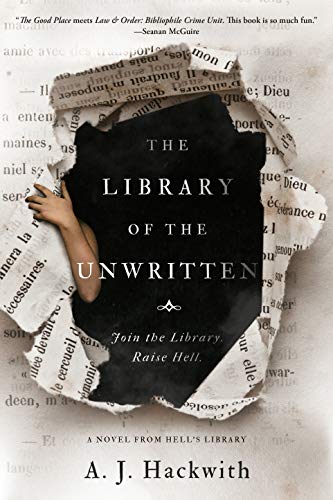
The premise is that many realms of the afterlife have libraries, including Hell, where our protagonist Claire is the head librarian of the Unwritten Wing. Here are all the books that have, for one reason or another, remained unwritten. Sometimes they get frustrated with their stagnated story, or the plot given to certain characters, and manifest into someone from their own pages to wreak havoc, go harass their authors, etc.
Claire’s job is, traditionally, to stop this from happening or to go chase down the characters and confine them back to their pages when it does. Unfortunately, things get a little dramatic during her tenure as librarian, and malevolent demons and Horrors from Hell, warriors and Valkyries of Valhalla, archangels and spirits from Heaven, and an obscure crocodile god get drawn into a multi-realm battle for the power to rule, well… everything.
All over some books!
It’s a strange metaphysical concept, with all afterlife realms and religions coming together and interacting; a new idea of how one might atone for sins, perceived or legitimate, and how self-perception can be as strong as divine judgment.
Also, God is a woman. She’s AWOL and seems vaguely malevolent here, but She’s still a woman. Eat your heart out, Ariana Grande.
Listicles Non-Fiction blog posts Buying New Bookshelves Fiction Listicles Non-Fiction

 Buying New Bookshelves
1 Comment Leave a comment ›