Grad School Is Hard, Reading Is Not
Hi guys, long time no talk!
As I’ve mentioned multiple times previously as an excuse for not posting, I’m now in grad school. Things are getting highly chaotic, so this is not actually the best time to post. However, I didn’t post when things were less chaotic and now I’m avoiding grading my students’ assignments, so we’re here instead with a book “genre” I’ve wanted to talk about for months and just haven’t.
Anyway, one interesting subset of travel and/or history books I’ve stumbled upon fairly recently is almost a road trip kind of book, almost a history book. What these books do is detail historic sites that were once central in an event or conflict but have now disappeared. We learn about these battles or negotiations, yet if we went to visit the sites now it’d be an empty farmer’s field or paved-over office building with not even a plaque to commemorate what happened.
Two key examples I’ve recently read are Battlescapes: A Photographic Testament to 2,000 Years of Conflict by Alfred Buellesbach and Marcus Cowper, as well as Here Is Where: Discovering America’s Great Forgotten History by Andrew Carroll. These really emphasize how a common, nondescript setting can house a major, world-changing event and then fade back into the countryside or cityscape.
Battlescapes is a sweeping visual wonder in which the authors traverse European battlefields – especially those from the World Wars – and photograph those iconic battlegrounds as they are now. Some have monuments and memorials, yet some remain a country lane or pastureland just as they were before thousands of troops swept over them decades or even centuries ago.
I’m obviously not European, but I can’t imagine the feeling of being a landowner whose property housed a pivotal history event like that. I’m proud to be from where I am in Ohio, with such a rich history that includes sites such as Serpent Mound and brilliant minds such as the Wright Brothers, but in the context of recorded history it must be astonishing to be on the ground where there have been centuries of bloodshed and negotiations.
Now, I have been to some of the D-Day beaches, and of all “leftover” war sites those are some of the most obvious. Not only do monuments remain on some beaches, but the ground is pocked with bomb craters and the occasional shelter. Compare this to some of the older, less permanent war fields, with nothing to mark where so many fell, and it’s haunting you could walk over these graveyards without even knowing.
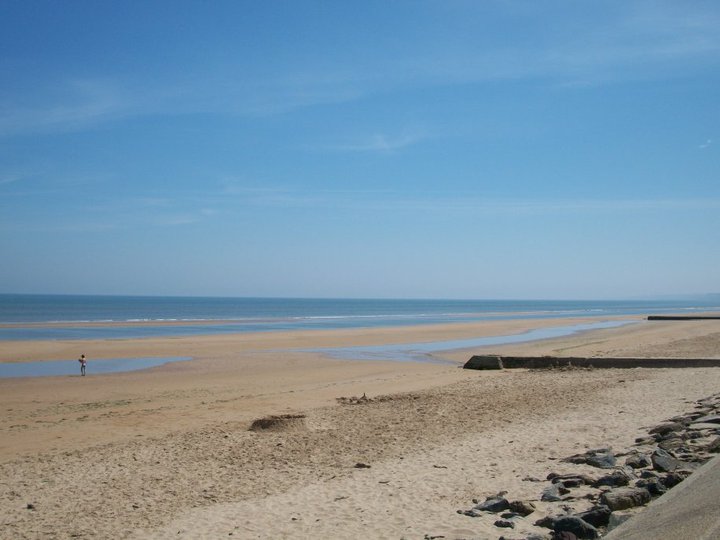
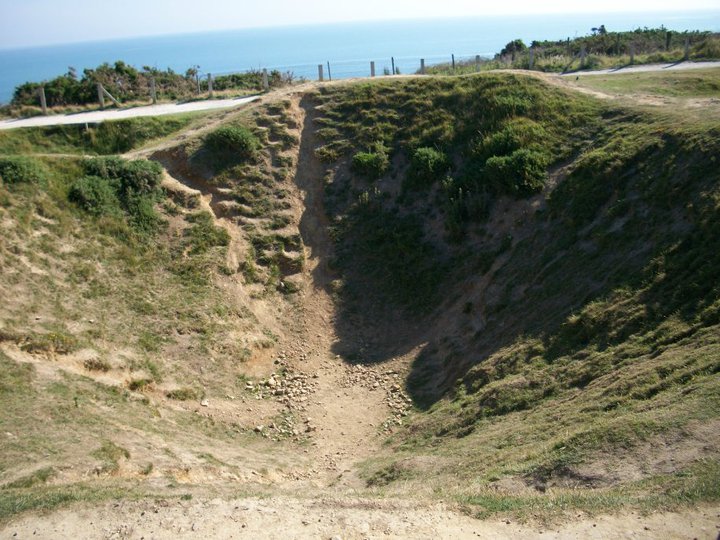
Looking at another continent, Carroll’s Here Is Where focuses on forgotten sites from American history and pop culture. It amazes me how many sites here we mythologize or talk about and still don’t even necessarily know where they are or have paved over in the preceding centuries.
It all makes you question progress for the sake of progress. Especially as the United States and Western Europe developed and moved through the Industrial Revolution, many businessmen and industrialists ignored history in preference of building bigger and better structures. There are so many office buildings now where major events took place that it’s almost baffling to think how this could have been allowed.
And yet, you can almost understand the thoughts of those people, who wanted to look forward instead of back and build a new future rather than maintaining and glorifying the past. I’m all for that, as much as I hate the Industrial Revolution, Gilded Age, and everything they stood for.
But there’s absolutely something to be said for the conservationist movement that began with the National Parks and moved ahead with all the historic sites we now preserve and make available to the public. Some times that’s not possible, nor the goal – in historic cities like Marblehead and Salem, both in Massachusetts, you can just walk down the historic main thoroughfares and look at the plaques on buildings to see the illustrious history behind what is now a Dunkin’ – but being able to find and publicize a historic site is what can save it from fates like its brethren.
I’ve been watching a docu-series recently on Disney+, made by National Geographic. It’s called “Drain the Oceans,” and it’s fascinating. To be fair, ever since I learned that documentaries didn’t have to tell you the truth I’ve been a little leery of them – after all, if you have a platform and you’re purporting yourself to be factual, why not tell the truth? – and sometimes the framing here is a little wonky, but it’s actually really interesting.
With CGI, they – as the title suggests – drain the oceans and seas, and even sometimes the sands of Egypt or harbor silt of Rome and San Francisco to find lost treasures and solve mysteries of the past. Exciting archaeological technology such as sonar, radar, and hands-on excavations has meshed with this new visual tech to let us evaluate wrecks and ruins and either solve or debunk past mysteries.
As I said, some things are a little suspect (after all, people knew immediately what sunk the Lusitania, as there were survivors on all sides of the encounter; it doesn’t require a super special investigation to figure that out), but I bring it up because it’s the same kind of concept. When you fly over the oceans or take a cruise somewhere, you rarely consider what’s on the ocean floor beneath you. If you do, you probably assume it’s some fish or coral, much less a human structure or watery graveyard.
Every inch under our feet is history for someone. Was this where a dinosaur once died? Was this the site of an armed battle or a watershed treaty? Was this just an everyday person’s home, hunting ground, religious ground, graveyard?
It’s amazing to think and contextualize how many people have been here before us and the events that humanity has gone through. Who stepped where you did? And why does it matter?
Listicles Non-Fiction blog posts Buying New Bookshelves History Listicles Non-Fiction

 Buying New Bookshelves